AI usage
Short answer: Unmarked text is mine. Marked text was produced by an agent. The mark means the same thing wherever you see it on this site, whichever section it is in.
Method
Every sentence without the mark is mine. I use agents while writing: correction, research, code. But any sentence with an opinion or an “I” in it is mine; the rule is Simon Willison’s. Pieces that AI only read and corrected carry no mark.
Marked content is different. I produce it through pipelines I built, with my own templates and rules: an agent gathers from many sources, summarises, and drops publish-ready text. The sentences are not mine; the choice of topic, the template and the rules are. In return, two rules hold:
- Where the text makes claims, every claim is numbered inline and its full link sits at the foot of the piece. Verification is left to the reader.
- The agent’s own “verified” claims have no place. I watched it write “pulled from the profile” for a page it could not fetch; that column is gone.
What the big platforms do
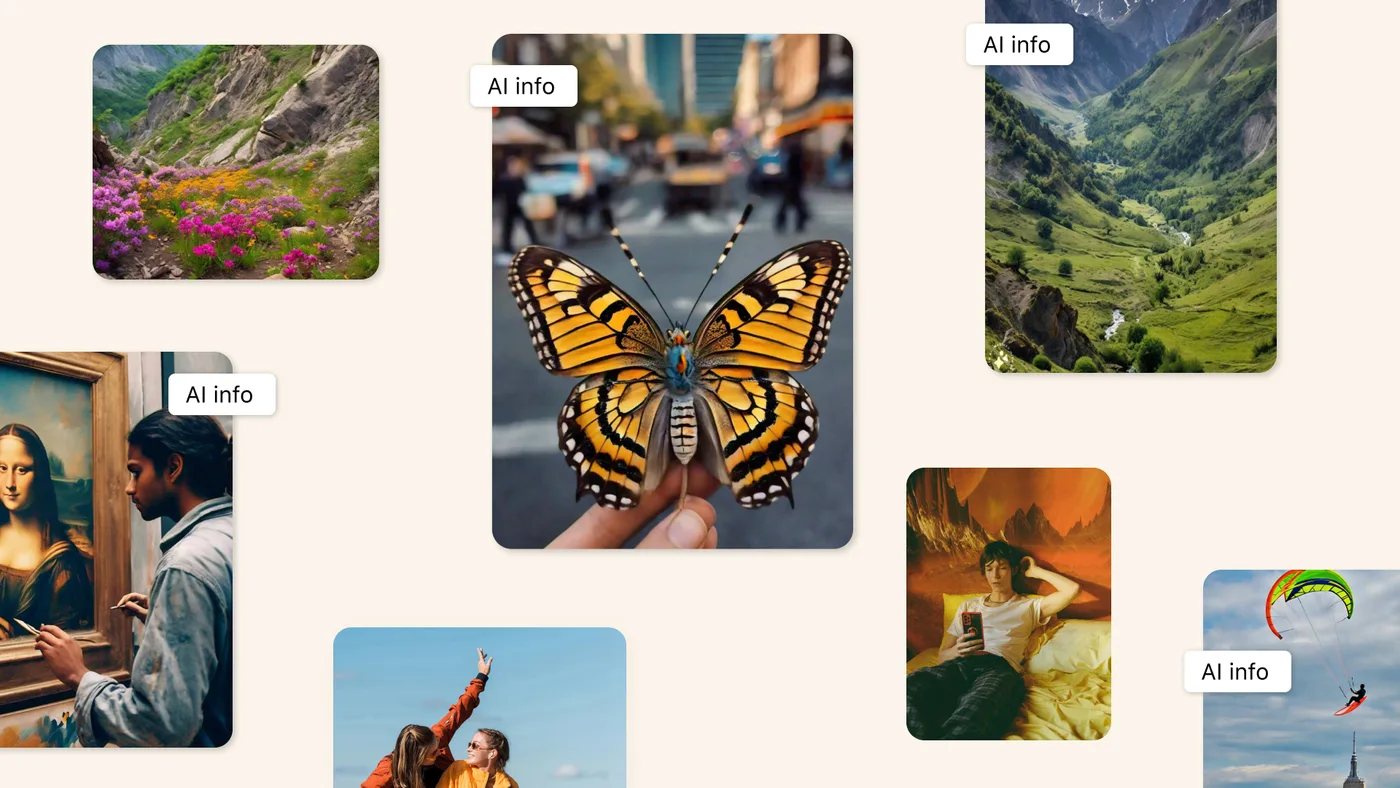
Meta and YouTube are solving the same problem and both landed in the same place: not hiding the content, but stating its origin with a visible label.
Meta (Facebook, Instagram, Threads) puts an “AI info” label on AI-generated posts. It launched in May 2024 as “Made with AI” and was renamed in July 2024. The label sits at the top of the post; clicking it opens a panel explaining what was AI. Meta’s announcement.
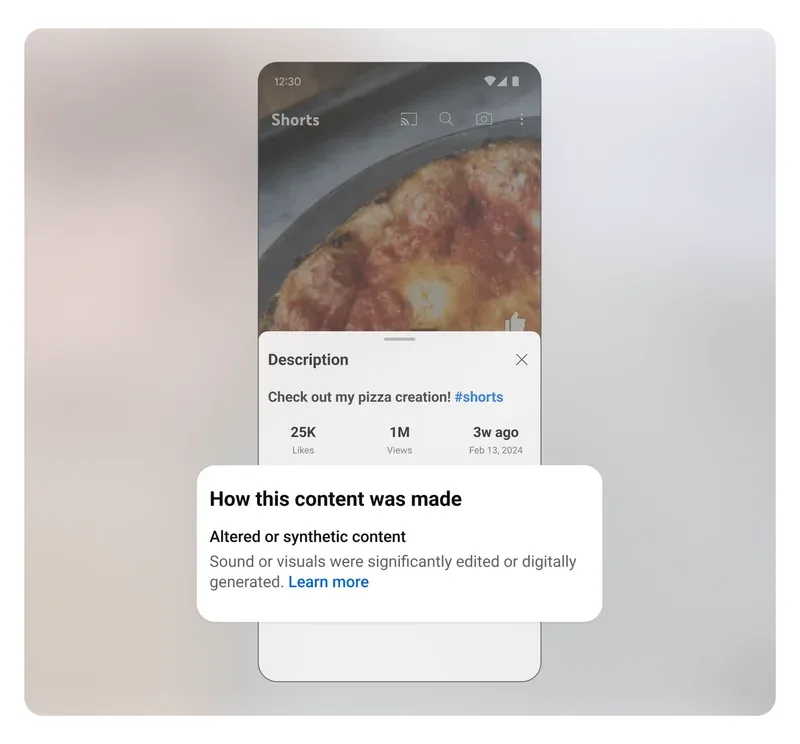
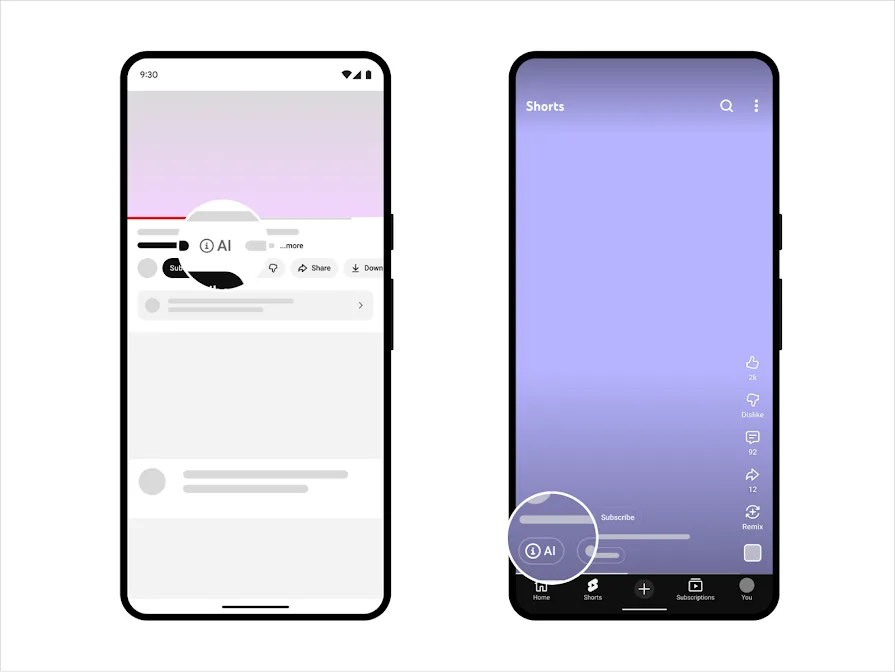
YouTube requires uploaders to disclose realistic AI-generated or altered content; the video gets an “Altered or synthetic content” label. On most videos it sits in the expanded description; on sensitive topics such as health, news, elections and finance it moves onto the player. YouTube may add the label itself when nothing was disclosed and the content could mislead. In force since March 2024. YouTube’s announcement and help page.
The label
Here is the equivalent on this site: when an agent wrote the whole text, the byline carries a small dashed mark next to the date: ai-written. It is shaped differently from the topic chips on purpose; it is not a topic, it is provenance. The same mark appears on list cards, in tables of contents and in the menu, and it says the same thing everywhere. Clicking it brings you here.
The machine side carries the same information: marked pages have
<meta name="ai-disclosure" content="ai-generated">, the .md mirror has an
AI: ai-generated line, and RSS and JSON-LD use IPTC
trainedAlgorithmicMedia.
If you find an error
If you see a wrong claim in a marked piece, open an issue in the repository or leave a comment under the piece. Every error the agent gets away with is a rule to add to the template.